

how a top 0.1% student thinks about motivation and discipline
the Motor of Productivity

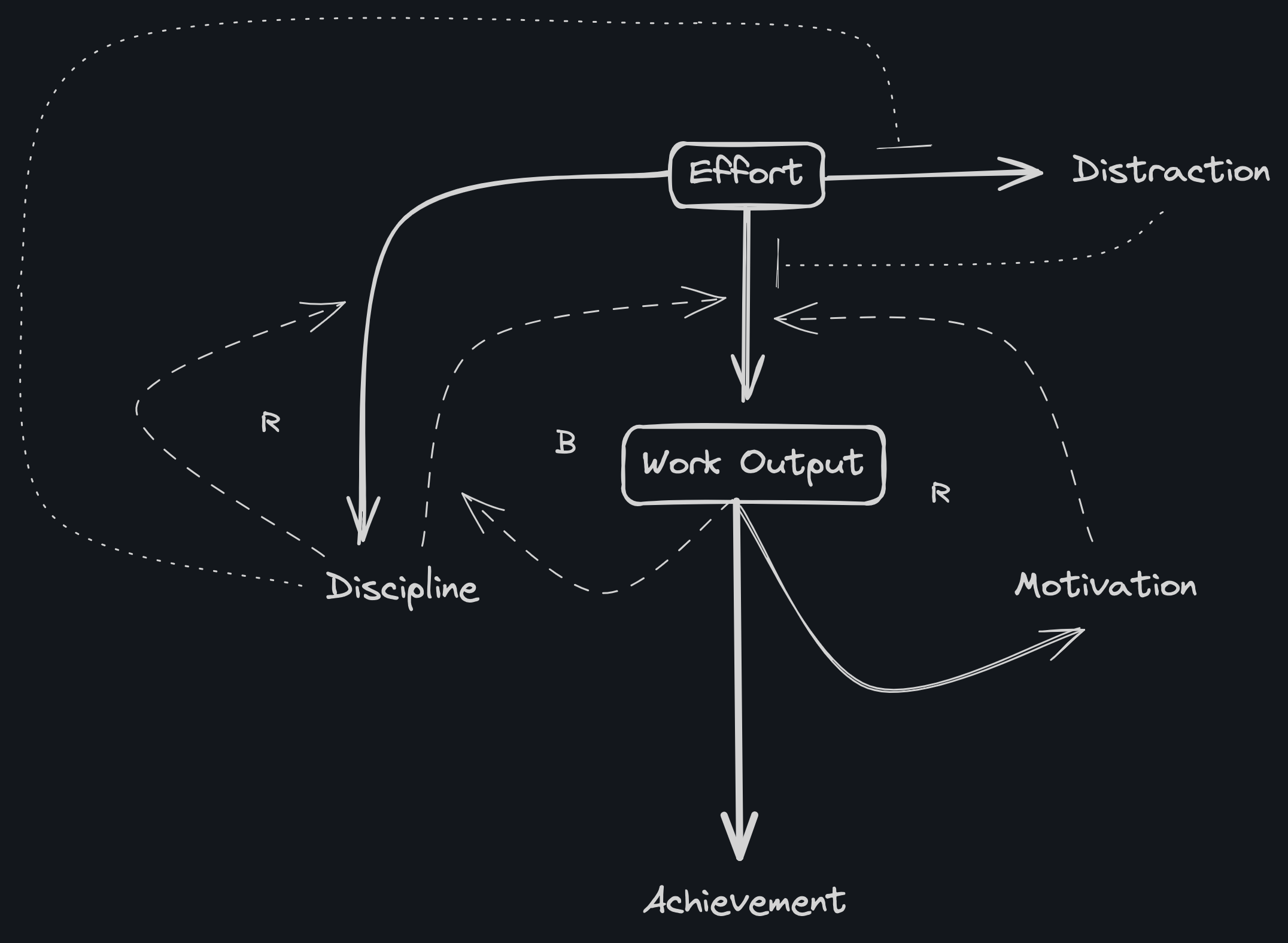
This is what I call the ‘Motor of Productivity’. I briefly considered calling it the Engine of Productivity, then I looked up the difference between a motor and an engine: Motors convert electrical energy to mechanical, while Engines convert chemical to mechanical. In this case, psychic energy, aka Effort, aka electrical neural impulses, is converted into physical output, so Motor seems appropriate. Also Motor just sounds better.
Our Motor of Productivity lays out the basic relationships between Effort, Output, Discipline, Motivation, and Distraction. If you’ve even skimmed the surface of the productivity space for a while, these concepts are nothing new. But have you ever seen them laid out so cleanly and clearly? I bet not. Smash that like and subscribe button.
I made this diagram in late 2024, when I discovered Systems Theory and thought I’d unlocked the literal secret to life itself. I started seeing everything in terms of stocks and flows and feedback loops, and I tried building a unified theory of Happiness and Well Being, which failed, likely because I’ve never been Happy or Well in my life. No I’m kidding. Sorta.
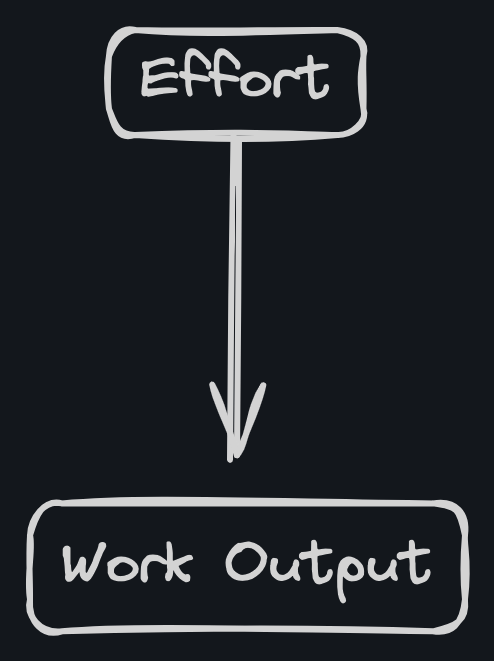
Effort becomes Output. That’s where it all begins. You put work in, you get product out. Creative product, academic product, business product, all of the above, however you personally define it. But obviously, the relationship between effort and output is not so simple or direct. This flow is modulated by Motivation and Discipline.
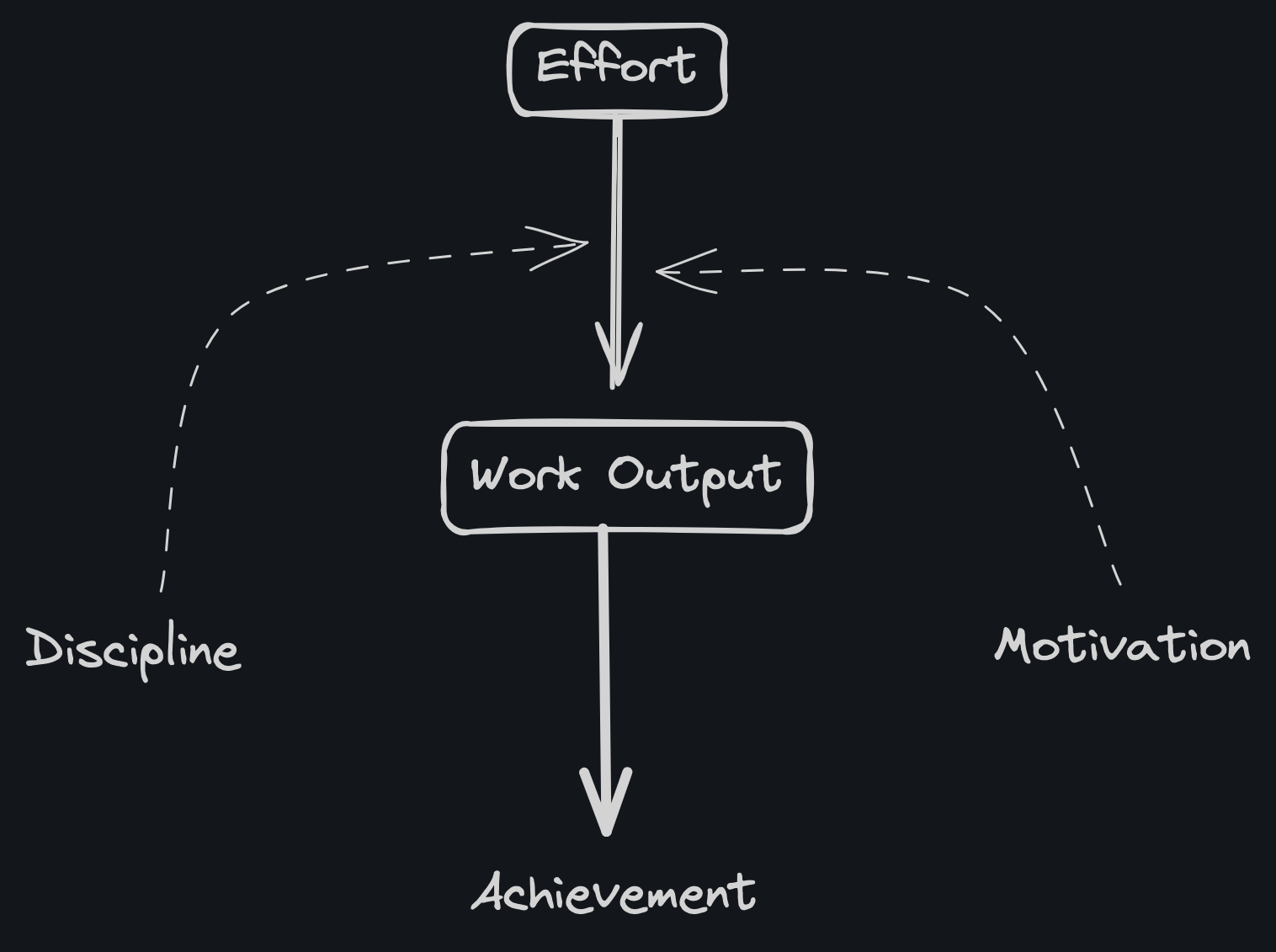
Both Motivation and Discipline positively modulate how much Effort becomes Output (as you can see from the dotted arrows). The more motivated and disciplined you are, the more work goes into creating product. But Motivation and Discipline work in different ways:
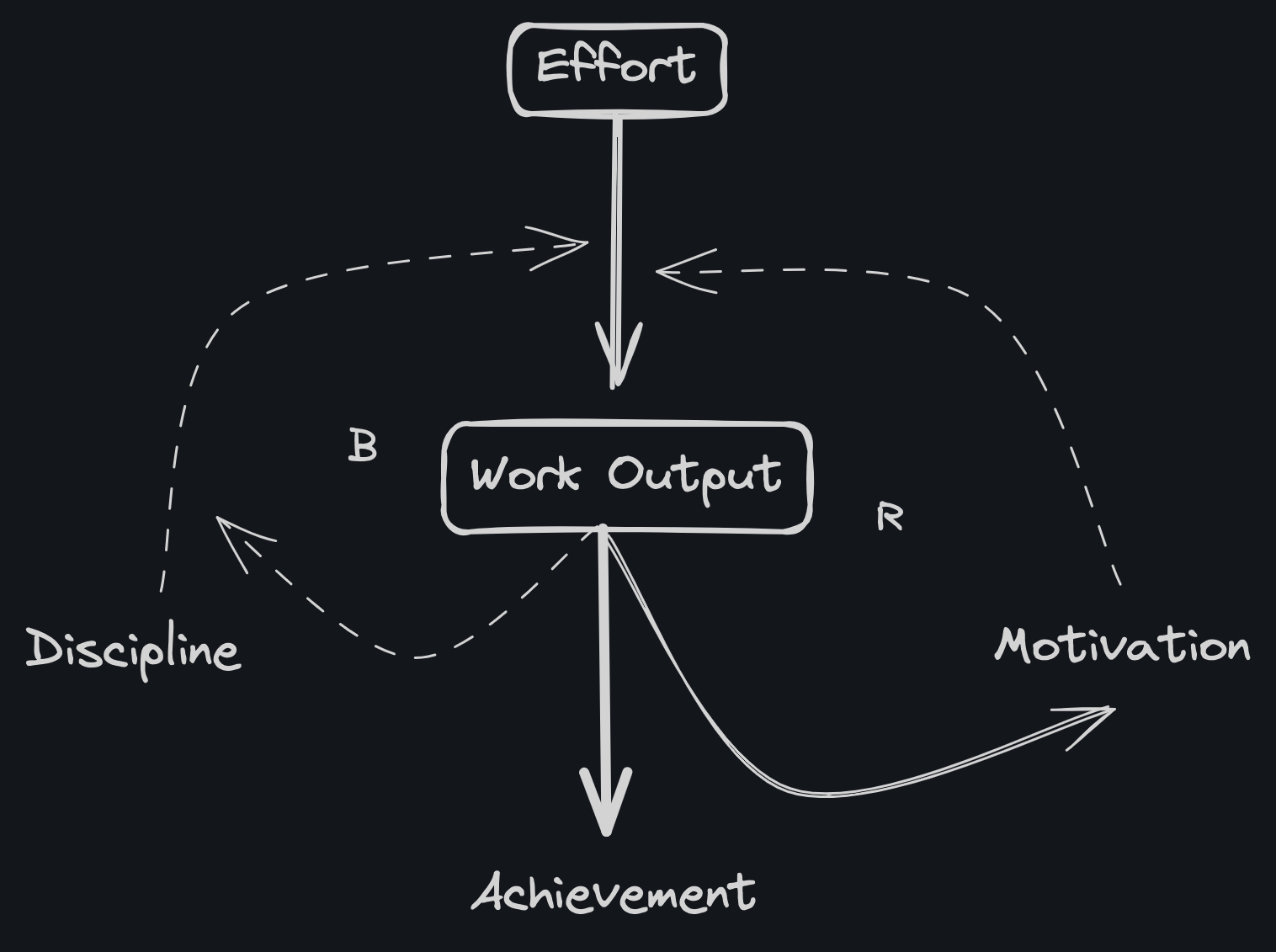
Motivation generally works as a positive feedback loop, aka a Reinforcing Feedback Loop, hence the R on the diagram.1
You win a game a few times early on and you’re more likely to keep playing. You make some money from work or get a few likes and subscribers from an essay you post (cough cough), and that high motivates you to put more effort in. When results are positive, more Effort is invested, creating a runaway flywheel that feels really good in the moment.
But the opposite is true as well. When times are bad and you get poor results, your motivation drains and your Effort runs dry.
This is where Discipline steps in. Discipline works as a negative feedback loop or Balancing Feedback Loop (hence the B). Balancing Feedback Loops work like a thermostat - if the temperature drops below a certain level, it works to bring it back up. In this case, when Effort drops too low, your level of Discipline brings it up back up to a minimum acceptable level. Or it should.
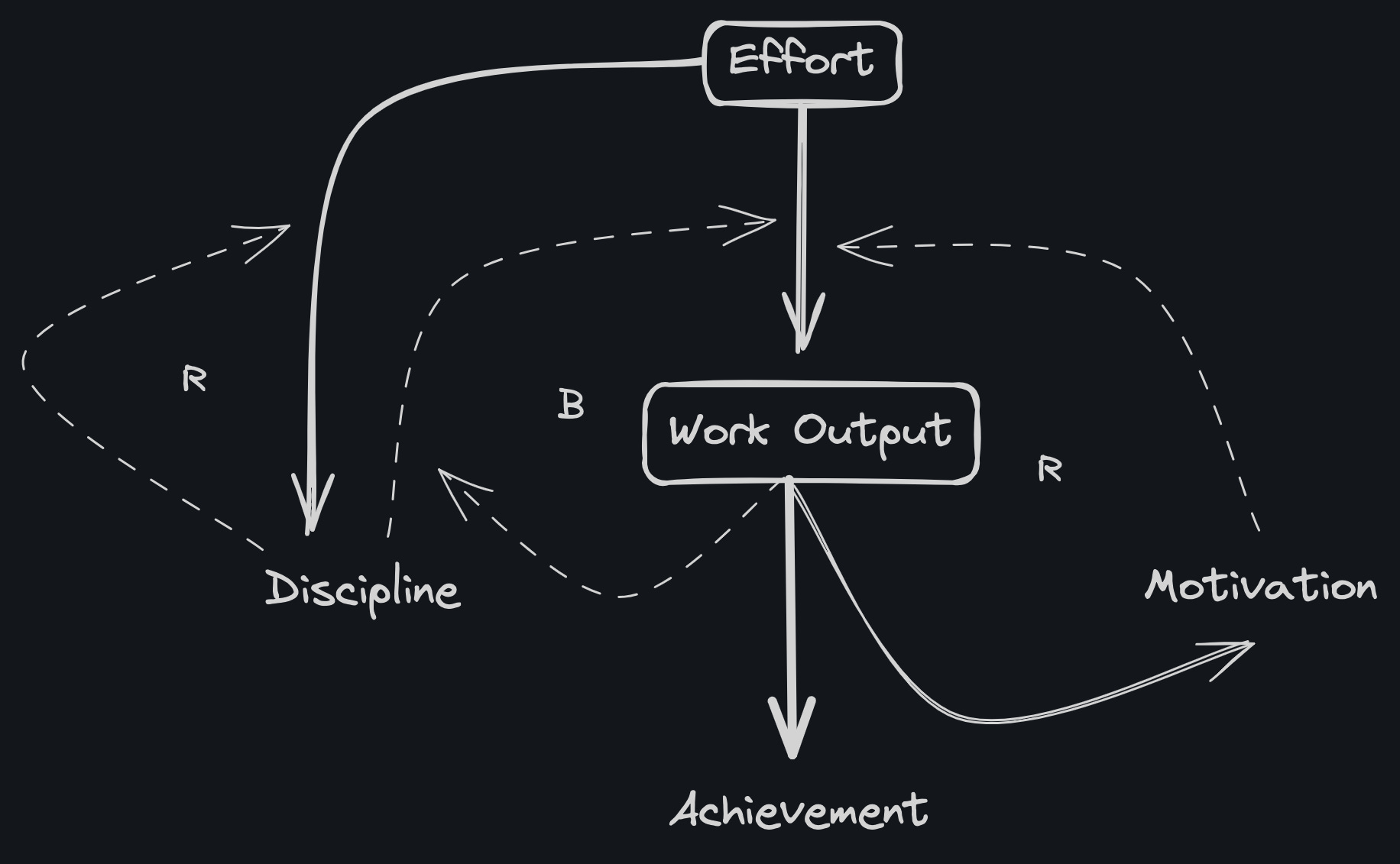
The cool thing about Discipline is that you can increase it directly through dedicated Effort (as shown as a direct flow on the diagram). In fact, this is a Reinforcing Feedback Loop — when you build good habits, that makes it easier to build other good habits, and so on.
So to recap: Effort becomes Output, this relationship is modulated by Motivation and Discipline, which function as complementary feedback loops, and building Discipline is itself a positive feedback loop. But there’s one more piece to the puzzle.
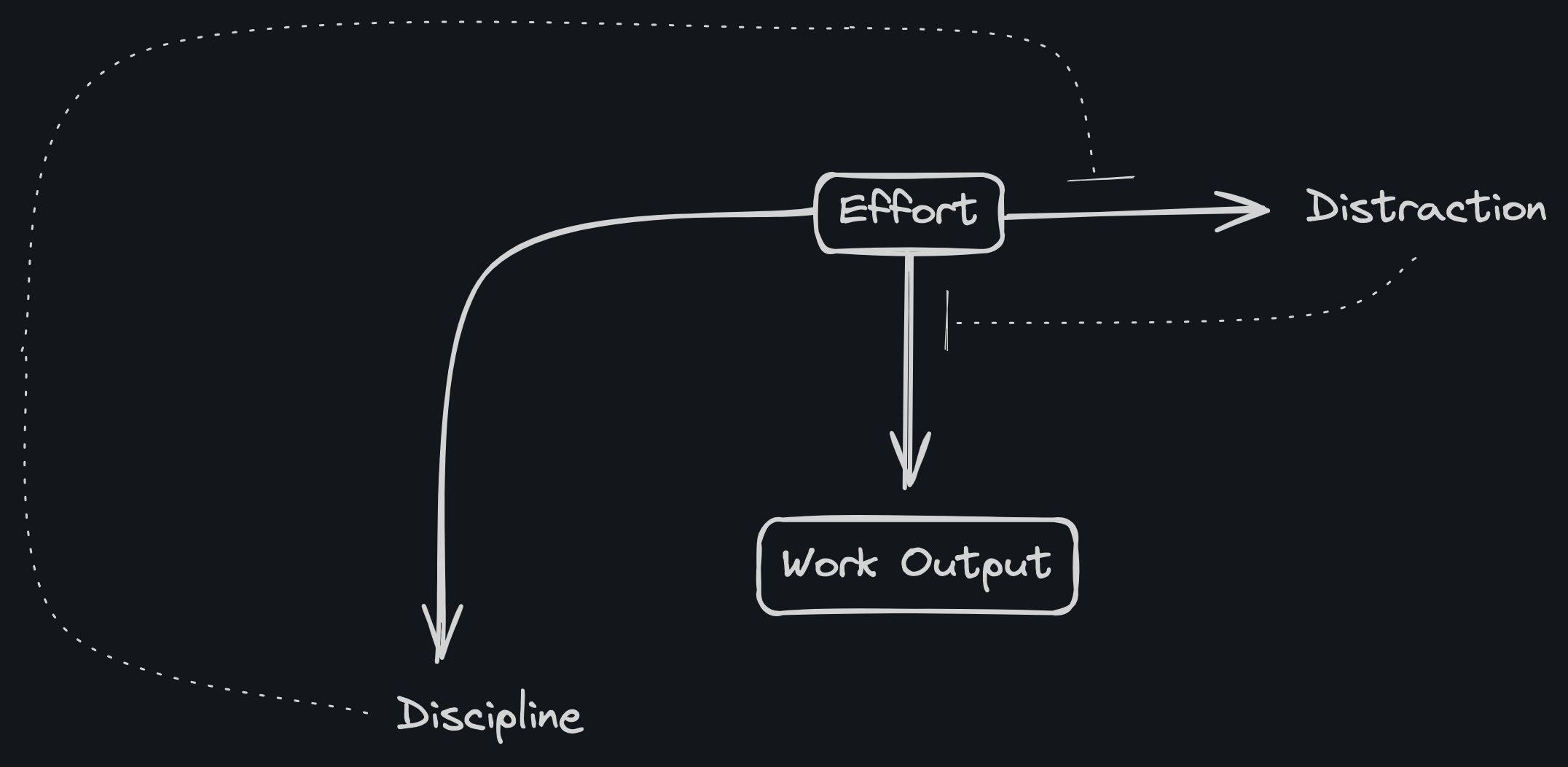
Enter, Distraction. This is where your Effort leaks. Think about all the hours lost to reels or TikTok or watching endless Minecraft videos on YouTube (I’m only slightly autistic). Furthermore, even when you do sit down to work, you can no longer focus (see inhibitory dotted T lines on diagram).
Imagine you’re filling up a bathtub. How do you increase the fill rate? The obvious way is to turn the nozzle and increase the rate that water is flowing in from the spout. But sometimes it’s more effective just to plug up any leaks.
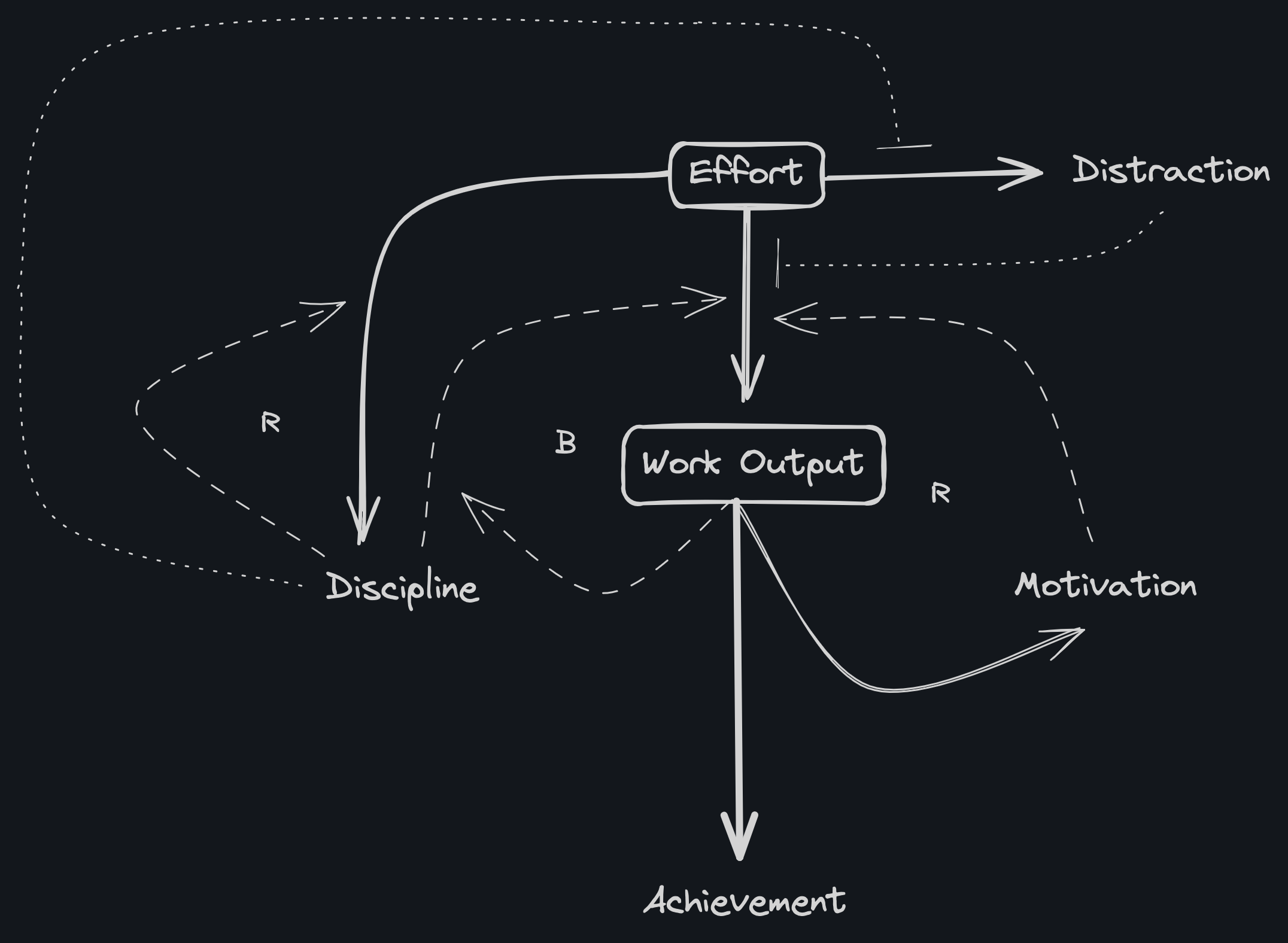
Okay great, so that’s the full picture. How do we apply this information?
A few key points: you can’t control motivation.2 So you have to focus on discipline. Sometimes it’s good to force yourself to Do The Work. Other times it’s more effective to build more discipline or to stop the leaks.
I’ve struggled with productivity and Discipline for the last... 27 years of my life. I’ve never been able to keep a consistent work or study schedule, except for that one time I did that really hard thing that you guys are absolutely tired of hearing me talk about. I run almost entirely on Motivation. I cannot get myself to work if I don’t Feel Like It. And I know if I keep going this way, I’ll let my youth pass me by and feel like I wasted my potential.
I know that I’m happiest when I’m most disciplined. I was most mentally stable when I was waking up at 5 am and working out every morning (which I did for 60 days straight as part of a 100 day challenge). And I was most peaceful when I ditched my smartphone for a flip phone and disconnected from social media entirely.
But I’ve been kinda spiraling since I blew up my life back in September. I’m back on the smartphone, staying up all night, and skipping workouts. I feel like such a Loser. It’s easy to fall back into old patterns of learned helplessness and self-pity. But don’t worry. It won’t happen. I’ve come back from way worse.
So here’s the plan: I’m going to start by rebuilding my foundational disciplinary habits: make my bed every day. Exercise first thing in the morning. And at the bare minimum, release a blog post every single Sunday.
None of this is particularly revolutionary, but I anticipate these small changes will boost confidence and morale, and kick start a disciplinary flywheel that will propel me into the most prolific creative period of my life so far.
So keep an eye out for that. I’ll keep you posted. See you next week.

i’m realizing while editing this that motivation can work as a balancing feedback loop as well, e.g. fear of getting a bad grade forces me to study when exams get close, but for the purpose of simplicity we’ll only look at positive valence motivation.
except for finding more interesting work, I guess, but I have literally the most interesting job in the world (filming videos, making music and writing essays), so that’s probably not the issue.